7 Early Warning Signs of Memory Decline After 60 — And What You Can Do About It
You're in the middle of a sentence and the word you need just… disappears. You walk into a room and stand there wondering why. You call your daughter by your other daughter's name — again. And somewhere in the back of your mind, a quiet question starts to form: Is this normal? Or is something wrong?
If you're over 60, you've almost certainly had moments like these. And you're far from alone. According to the National Institute on Aging, more than 13 percent of Americans aged 60 and older report worsening memory or confusion — yet research suggests the actual number experiencing some level of cognitive change is closer to 80 percent.
The gap between those two numbers matters. Many people dismiss real warning signs as "just getting older." Others panic about occasional forgetfulness that is, in fact, completely normal. This article will help you understand the difference — what to watch, what to ignore, and what you can actually do to support your brain as you age.
What You'll Learn in This Article:
The 7 most significant early warning signs of memory decline after 60, how to tell the difference between normal aging and something more concerning, lifestyle factors that accelerate cognitive decline, and science-backed steps to support brain health at any stage.
First: What Actually Happens to the Brain After 60
Before diving into warning signs, it helps to understand what normal brain aging actually looks like — because not every change is a red flag.
Starting in your late 50s and accelerating through your 60s, the brain undergoes real physical changes. Brain volume decreases by roughly 5 percent per decade after age 40, with the frontal lobe — responsible for planning, attention, and working memory — among the most affected. Neurons communicate more slowly. The production of key neurotransmitters like acetylcholine and dopamine gradually declines. Blood flow to memory-critical regions like the hippocampus decreases.
None of this is inevitable doom. The brain remains remarkably adaptable throughout life — a property neuroscientists call neuroplasticity. But it does mean that certain cognitive changes are expected, and others are not. Knowing the difference is the first step.
| Normal Aging | Worth Watching Closely |
|---|---|
| Occasionally forgetting a name but remembering it later | Frequently forgetting names of close family or friends |
| Taking longer to recall a word mid-conversation | Losing track of conversations entirely and repeatedly |
| Misplacing keys once in a while | Putting objects in clearly wrong places (keys in the fridge) |
| Needing to re-read complex instructions | Being unable to follow a recipe or phone bill you've managed before |
| Occasionally getting dates wrong | Losing track of the month, season, or year |
| Making an occasional financial error | Repeated trouble managing bills, budgets, or basic math |
| Feeling less sharp after a poor night's sleep | Consistent mental fog that doesn't lift regardless of rest |
The 7 Early Warning Signs of Memory Decline After 60
These seven signs don't automatically mean dementia or Alzheimer's. Many have other causes — stress, poor sleep, medication side effects, or nutritional deficiencies — that can be addressed. But they are signals worth paying attention to, especially if they are new, worsening, or affecting daily life.
You Forget Names — Including People You Know Well
Blanking on the name of a new acquaintance is common and harmless. But if you're regularly struggling to recall the names of people you've known for years — family members, longtime neighbors, your doctor — that's a different pattern. This type of retrieval failure, particularly for proper nouns, is often one of the earliest measurable signs of hippocampal stress. The hippocampus is the brain region most central to memory formation and retrieval, and it is also one of the first areas affected by Alzheimer's disease.
You Lose Your Train of Thought Mid-Sentence — Often
Everyone loses their train of thought occasionally, especially when tired or distracted. But if you find yourself stopping mid-sentence several times a day, unable to remember what you were saying even when the conversation has barely moved on, this may indicate a decline in working memory — the brain's ability to hold and manipulate information in real time. Working memory is heavily dependent on the prefrontal cortex, which is particularly sensitive to aging and to the neurotransmitter acetylcholine. Difficulty following conversations, losing the thread of a TV show, or repeating yourself without realizing it often trace back to this same system.
Recent Events Blur While Old Memories Stay Vivid
There's a telling and ironic pattern in early cognitive decline: people often remember events from 40 years ago in remarkable detail, yet can't recall what they had for dinner two nights ago. This isn't nostalgia — it's a neurological pattern called Ribot's Law. As the hippocampus is impaired, it struggles to encode new information into long-term storage. Older memories, which were consolidated long before the decline began, remain relatively intact. If you notice a growing gap between your ability to recall distant versus recent events, it's worth discussing with your doctor.
Familiar Tasks Suddenly Feel Confusing
Difficulty managing tasks that used to be routine — following a familiar recipe, setting up a new TV remote, handling your monthly bills, or navigating a route you've driven a hundred times — is one of the more significant warning signs. This isn't about complex new skills. It's about established, procedural knowledge that the brain usually executes almost automatically. When that automatic quality begins to erode, it often reflects broader changes in the brain's executive function networks. In clinical assessments, this difficulty with instrumental activities of daily living (IADLs) is a key marker evaluators look for.
You Misplace Objects in Unusual Places
Leaving your keys on a different counter than usual — normal. Finding your glasses in the freezer — not normal. The distinction matters. Ordinary misplacing happens because we're distracted when we set something down. What researchers flag as concerning is displacement to incongruous locations: putting objects somewhere that makes no logical sense and having no memory of doing so. This pattern reflects a breakdown in the formation of spatial and contextual memories, and it often accompanies a broader deterioration in episodic memory — the brain's record of specific personal events.
Persistent Brain Fog That Sleep Doesn't Fix
Brain fog — that feeling of mental sluggishness, difficulty concentrating, or thinking through cotton wool — has many possible causes in people over 60, including poor sleep, thyroid issues, vitamin B12 deficiency, or medication side effects. But when brain fog is persistent, unrelated to your sleep quality, and accompanied by other items on this list, it may reflect something more structural. Chronic neuroinflammation, reduced cerebral blood flow, and mitochondrial dysfunction — all associated with aging — can produce exactly this feeling. Persistent brain fog that does not respond to better sleep, hydration, or stress reduction is a signal worth investigating rather than accepting.
Changes in Mood, Personality, or Judgment
This one surprises many people. Memory decline is not only about what you remember — it also manifests in how you behave, feel, and make decisions. Increased irritability, withdrawal from social activities you used to enjoy, unusual suspicion of family members, impulsive financial decisions, or a noticeable shift in personality are all documented early features of cognitive change. The prefrontal cortex governs both working memory and emotional regulation. When its function declines, both are affected simultaneously. Family members often notice these personality shifts before the individual does — which is why loved ones' observations should never be dismissed.
When to Seek Medical Evaluation Promptly
If you or someone you love is experiencing three or more of the signs above on a regular basis, or if any single sign is severe enough to affect safety or daily functioning, a conversation with a physician or neurologist is appropriate. A healthcare provider can rule out reversible causes (thyroid dysfunction, B12 deficiency, medication side effects, depression) and, if necessary, conduct standardized cognitive assessments to establish a baseline. Early evaluation is always better than waiting.
What Accelerates Memory Decline After 60 — And What You Control
Genetics play a role in cognitive aging — but they are far from the whole story. A growing body of research identifies several lifestyle factors that significantly accelerate memory decline, most of which are modifiable.
Poor Sleep Is the Biggest Hidden Driver
During deep sleep, the brain runs its own maintenance cycle — flushing out metabolic waste products, including the amyloid proteins associated with Alzheimer's disease, through a system called the glymphatic network. Adults over 60 who consistently sleep fewer than 6 hours per night accumulate amyloid at significantly higher rates. A 2021 study in Nature Communications found that sleeping six hours or less per night at age 50 and 60 was associated with a 30 percent increased risk of dementia. Poor sleep quality — frequent waking, sleep apnea, restless legs — produces similar damage even when total hours seem adequate.
Chronic Stress Shrinks the Hippocampus
The stress hormone cortisol, when chronically elevated, directly damages the hippocampus — the brain's primary memory center. Studies using brain imaging have shown measurably smaller hippocampal volumes in people with chronic stress or anxiety disorders compared to age-matched controls. If you've noticed that your memory is noticeably worse during stressful periods, this is the physiological reason. The damage from chronic stress is cumulative but also partially reversible with consistent stress management practices.
Physical Inactivity Reduces Brain Volume Faster
Aerobic exercise does something remarkable: it stimulates the production of brain-derived neurotrophic factor (BDNF), a protein sometimes called "miracle-gro for the brain." BDNF promotes the growth of new neurons, strengthens synaptic connections, and directly supports hippocampal volume. Sedentary adults over 60 show faster rates of hippocampal shrinkage. Conversely, multiple controlled studies have shown that regular moderate aerobic exercise — even walking 30 minutes most days — can increase hippocampal volume and measurably improve memory scores.
Social Isolation Accelerates Cognitive Decline
The link between loneliness and dementia risk is one of the most consistent findings in cognitive aging research. Socially isolated older adults show significantly faster rates of cognitive decline compared to those with rich social connections. The mechanism appears to involve chronic low-grade inflammation, reduced cognitive stimulation, and changes in stress hormone regulation. The brain, it turns out, uses social interaction as a form of exercise.
Nutritional Deficiencies That Hit Hardest After 60
Several nutrients are disproportionately depleted in adults over 60 and have direct impacts on cognitive function:
- Vitamin B12 — absorption decreases with age; deficiency causes memory problems that can mimic dementia and are fully reversible with treatment
- Omega-3 fatty acids (DHA) — essential structural components of brain cell membranes; low levels are consistently associated with faster cognitive decline
- Vitamin D — receptors throughout the brain; deficiency linked to increased Alzheimer's risk and cognitive impairment
- Magnesium — required for hundreds of enzymatic reactions including those involved in memory consolidation
- Phosphatidylserine — a phospholipid that declines with age; supplementation has shown measurable benefits in memory and cognitive speed in clinical trials
Key Research Finding:
A large study published in Neurology found that adults over 65 with the lowest vitamin B12 levels had twice the rate of brain atrophy compared to those with normal levels — and the memory loss associated with B12 deficiency is almost entirely reversible with supplementation. This is one reason that any evaluation of memory symptoms in older adults should always include a B12 blood test.
What Science Says About Supporting Memory After 60
Beyond correcting deficiencies and improving lifestyle fundamentals, a number of plant-based compounds have accumulated meaningful clinical evidence for supporting cognitive function in aging adults. These are not miracle cures — they work gradually, through cumulative biological mechanisms, and they work best alongside the lifestyle changes described above.
Bacopa Monnieri
One of the most extensively studied herbal nootropics, Bacopa has been shown in multiple randomized controlled trials to improve delayed word recall, verbal learning speed, and working memory. Its active compounds — bacosides — enhance acetylcholine signaling, reduce neuroinflammation, and stimulate the production of BDNF. Benefits typically become measurable after 8–12 weeks of consistent daily use. Bacopa is a key ingredient in Memopezil™.
Lion's Mane Mushroom
Lion's Mane (Hericium erinaceus) contains compounds called hericenones and erinacines that stimulate the synthesis of Nerve Growth Factor (NGF) — a protein essential for the maintenance and growth of neurons. A double-blind Japanese clinical trial found that adults aged 50–80 taking Lion's Mane extract showed significantly higher scores on cognitive function tests than the placebo group after 16 weeks, with scores declining again after supplementation stopped. This dose-dependent, reversible effect is consistent with a genuine pharmacological mechanism.
Phosphatidylserine
Phosphatidylserine (PS) is a phospholipid that makes up a critical part of every brain cell membrane. As we age, brain PS levels decline. Supplementation has been evaluated in multiple clinical trials, and the evidence is strong enough that the FDA has issued a qualified health claim allowing products containing PS to state they "may reduce the risk of cognitive dysfunction in the elderly." Studies show improvements in memory, concentration, and word recall after 6–12 weeks of supplementation.
Rhodiola Rosea
While primarily known as an adaptogen for stress, Rhodiola's cognitive benefits are well-documented. Its active compounds — rosavins and salidroside — reduce cortisol levels, protect neurons from stress-induced damage, and enhance dopamine and serotonin signaling. For older adults whose cognitive decline is partly driven by chronic stress and elevated cortisol, Rhodiola addresses the root mechanism rather than just the symptoms.
Ginkgo Biloba
Ginkgo remains one of the most studied herbal compounds for cognitive aging. Its primary mechanisms include improving cerebral blood flow and acting as a potent antioxidant that reduces oxidative stress in brain tissue. A meta-analysis in the Journal of Psychiatric Research found statistically significant improvements in cognitive function and activities of daily living in older adults taking standardized ginkgo extract compared to placebo, particularly in those with mild cognitive impairment.
The Multi-Ingredient Advantage:
Memory decline after 60 involves multiple simultaneous mechanisms — reduced acetylcholine, elevated cortisol, oxidative stress, reduced cerebral blood flow, declining BDNF. No single compound addresses all of them. This is why multi-ingredient formulas combining Bacopa, Lion's Mane, Phosphatidylserine, Rhodiola, Ginkgo, and L-Theanine — like those found in Memopezil™ — are designed to work across several pathways at once. The clinical evidence for multi-ingredient approaches consistently outperforms single-compound studies.
A Practical Plan: What to Do Starting This Week
If this article has prompted some reflection about your own memory, here is a practical, evidence-based starting point:
- Get a blood test. Ask your doctor for a full panel that includes vitamin B12, vitamin D, thyroid function (TSH), and a complete metabolic panel. Correcting deficiencies is often the fastest route to cognitive improvement.
- Prioritize sleep quality. If you wake frequently, snore heavily, or feel unrefreshed despite 7–8 hours in bed, discuss sleep apnea screening with your doctor. This one intervention has significant downstream cognitive benefits.
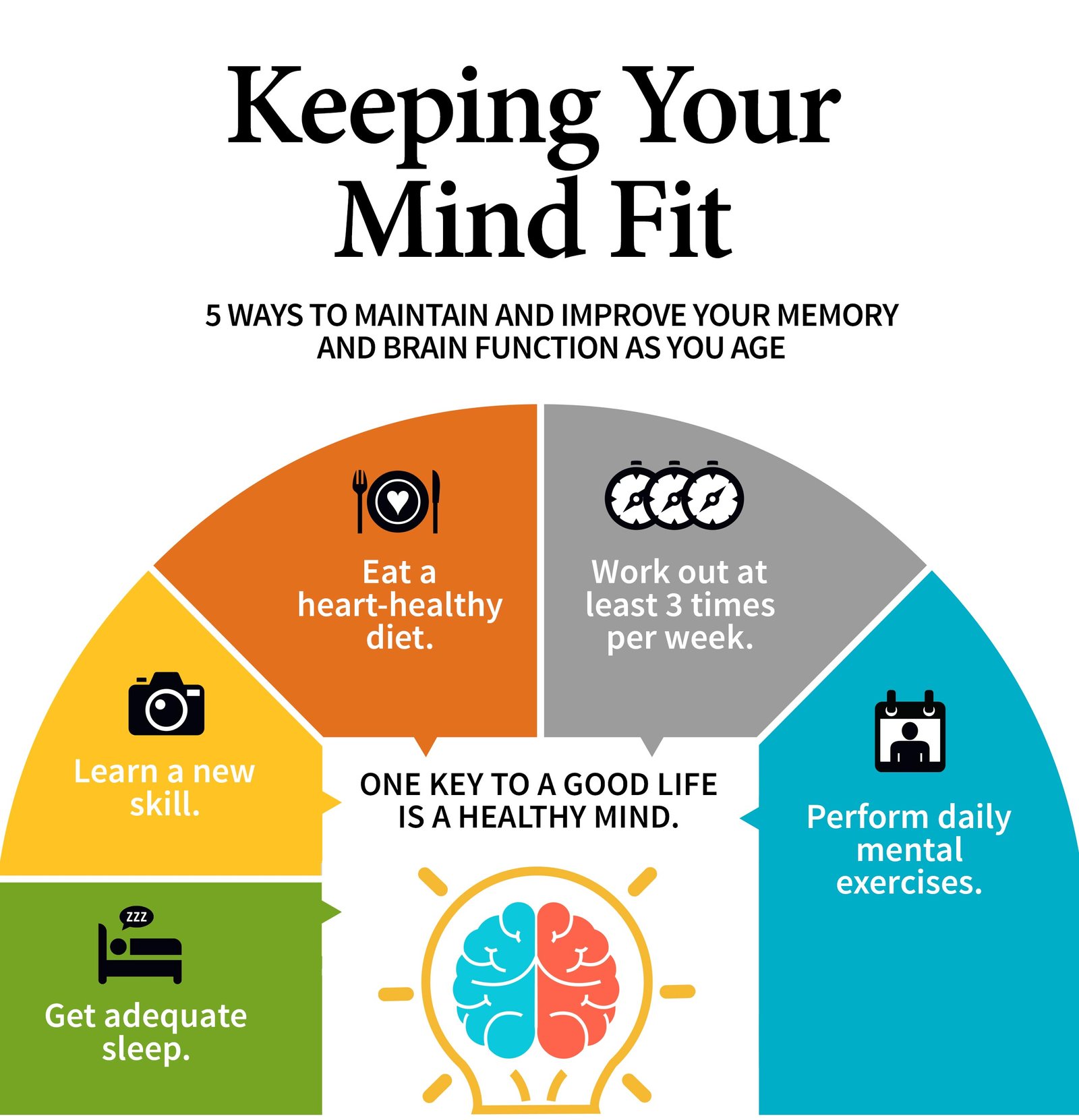
- Start walking daily. Even 20–30 minutes of brisk walking most days measurably supports hippocampal health and BDNF production. Consistency matters more than intensity.
- Stay socially connected. Regular meaningful conversation is genuine cognitive exercise. Clubs, faith communities, volunteering, and family dinners all count.
- Reduce ultra-processed food. The Western diet — high in refined sugar, processed seed oils, and sodium — drives the neuroinflammation that accelerates cognitive decline. The Mediterranean diet has the strongest evidence for brain health.
- Consider targeted cognitive support. If you want to add evidence-based supplementation, look for formulas containing clinically studied ingredients at meaningful doses — Bacopa Monnieri, Phosphatidylserine, Lion's Mane, Rhodiola, and Ginkgo Biloba.
- Document what you're noticing. Keep a simple log of memory lapses for two to four weeks before seeing your doctor. Frequency, type, and context give a clinician far more to work with than "I've been a bit forgetful lately."
A Word on Self-Diagnosis:
This article is educational, not diagnostic. Memory changes have many causes, and the same symptom can have very different meanings depending on the full clinical picture. If you are concerned about your cognitive health — or a loved one's — please work with a qualified healthcare provider. Early evaluation is not something to delay out of fear of what you might learn. The earlier cognitive changes are identified, the more options are available.
Frequently Asked Questions
What are the early signs of memory decline after 60?
The most common early signs include frequently forgetting names or words mid-conversation, misplacing objects in unusual places, losing track of recent events while remembering the distant past clearly, difficulty following multi-step instructions, increased reliance on notes or reminders, getting disoriented in familiar places, and noticeable changes in mood or personality. One or two of these occasionally is normal aging; several happening regularly may warrant attention.
Is it normal to be forgetful at 60?
Some degree of forgetfulness is a normal part of aging after 60. Occasionally forgetting a name, misplacing your keys, or taking longer to recall a word is not a cause for alarm. What distinguishes normal aging from early cognitive decline is the frequency, severity, and impact on daily life. If memory lapses are disrupting your routines, relationships, or safety, it is worth discussing with a healthcare provider.
At what age does memory start to decline?
Research shows that certain cognitive functions begin declining gradually as early as the mid-40s, though most people do not notice meaningful changes until their 60s or 70s. Processing speed tends to slow first, followed by working memory. Long-term memory and vocabulary often remain strong into advanced age. The rate of decline varies widely between individuals depending on genetics, lifestyle, sleep quality, and overall health.
What is the difference between normal aging and early dementia?
Normal aging causes occasional forgetfulness that does not significantly impact daily life — you may forget a name but remember it later. Early dementia involves more consistent and progressive memory loss that affects daily functioning, such as getting lost in familiar areas, forgetting recent conversations entirely, or struggling with tasks that were once routine. If you are concerned, a healthcare provider can assess with standardized cognitive tests.
Can memory decline after 60 be reversed or slowed?
While age-related changes to the brain cannot be fully reversed, research shows that certain lifestyle interventions can significantly slow the rate of cognitive decline. Regular aerobic exercise, quality sleep, mental stimulation, strong social connections, stress management, and proper nutrition have all been shown in clinical studies to support brain health and reduce dementia risk. Certain plant-based compounds including Bacopa Monnieri, Phosphatidylserine, and Lion's Mane Mushroom have also shown measurable benefits in peer-reviewed research.
Support Your Memory with Science-Backed Ingredients
Memopezil™ combines Bacopa Monnieri, Lion's Mane, Phosphatidylserine, Rhodiola Rosea, Ginkgo Biloba, and L-Theanine — all in one daily formula designed specifically for adults 60+ who want to stay sharp.
Rated 4.9/5 by 1,250+ verified buyers | Free U.S. shipping | 60-day money-back guarantee
→ Visit the Official Memopezil™ WebsiteReferences and Sources:
- National Institute on Aging. "Memory, Forgetfulness, and Aging: What's Normal and What's Not?" NIH. nia.nih.gov
- Daviglus, M. L., et al. (2011). "National Institutes of Health State-of-the-Science Conference Statement on Preventing Alzheimer's Disease and Cognitive Decline." Annals of Internal Medicine, 153(3), 176–181.
- Sabia, S., et al. (2021). "Association of sleep duration in middle and old age with incidence of dementia." Nature Communications, 12, 2289. doi.org
- Stough, C., et al. (2001). "The chronic effects of an extract of Bacopa monniera on cognitive function in healthy human subjects." Psychopharmacology, 156(4), 481–484.
- Mori, K., et al. (2009). "Nerve Growth Factor-Inducing Activity of Hericium erinaceus in 1321N1 Human Astrocytoma Cells." Biological & Pharmaceutical Bulletin, 32(9), 1645–1648.
- Crook, T. H., et al. (1991). "Effects of phosphatidylserine in age-associated memory impairment." Neurology, 41(5), 644–649.
- Olsson, E. M., et al. (2009). "A randomised, double-blind, placebo-controlled, parallel-group study of the standardised extract SHR-5 of the roots of Rhodiola rosea in the treatment of subjects with stress-related fatigue." Planta Medica, 75(2), 105–112.
- Tan, M. S., et al. (2015). "Efficacy and adverse effects of Ginkgo biloba for cognitive impairment and dementia." Journal of Alzheimer's Disease, 43(2), 589–603.
- Langa, K. M., & Levine, D. A. (2014). "The diagnosis and management of mild cognitive impairment." JAMA, 312(23), 2551–2561.